
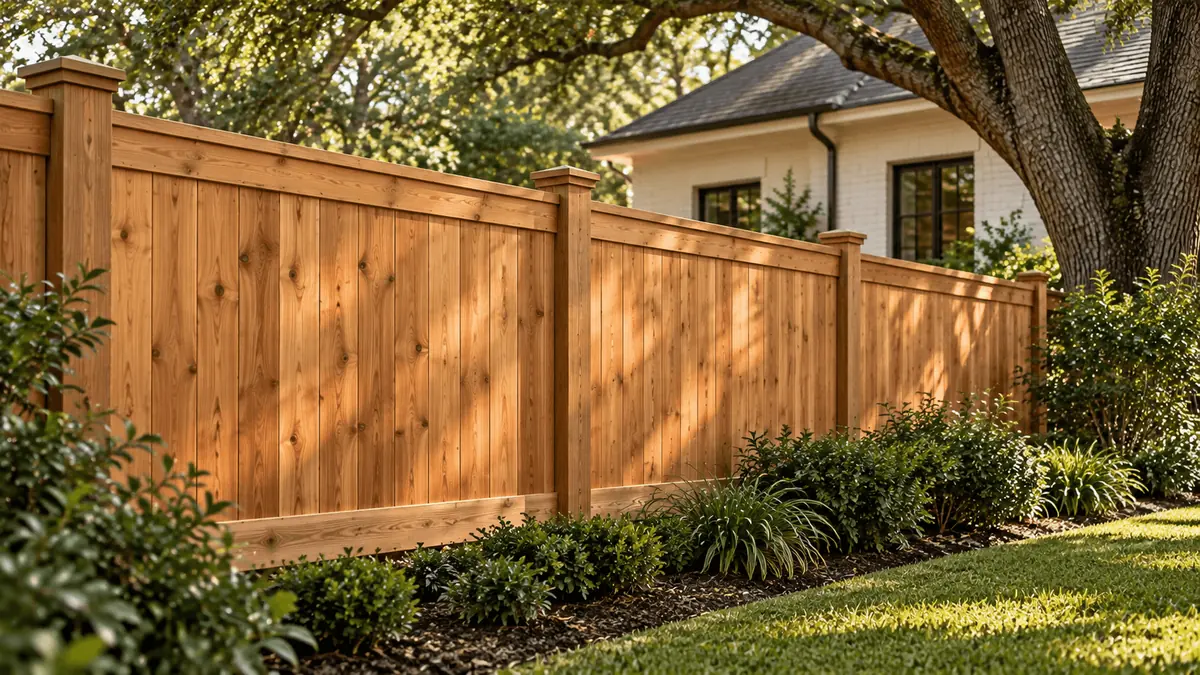
Cedar
LastsLonger. Resists rot and insects and stays straighter in Houston humidity.
FinishHolds stain well and keeps a finished look longer.
CostCosts more up front.
Choose itIf you plan to stay in the home for a while.
From a leaning section to a storm-damaged fence line, Southern Oak fixes what will hold and replaces what will not. Adam or Kevin walks your fence, explains the options, and puts the scope and price in writing before work begins.
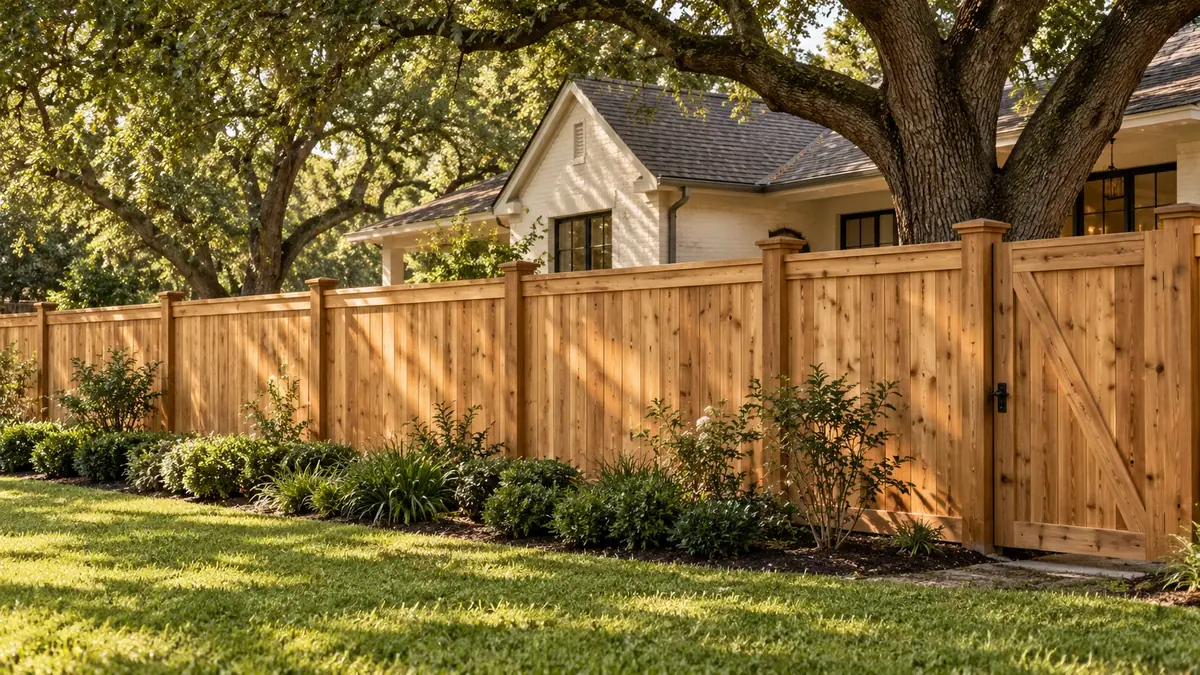



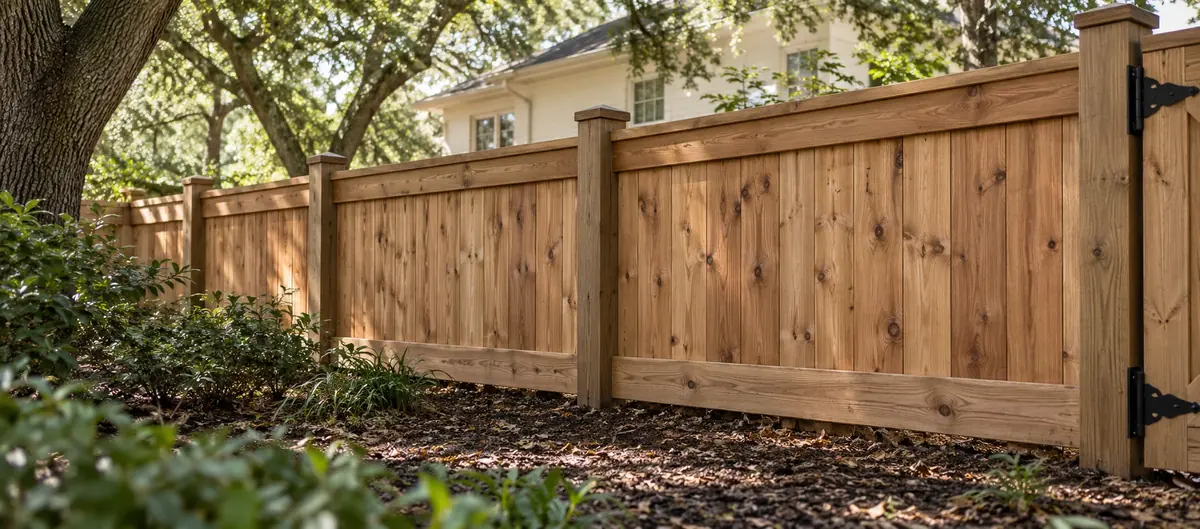
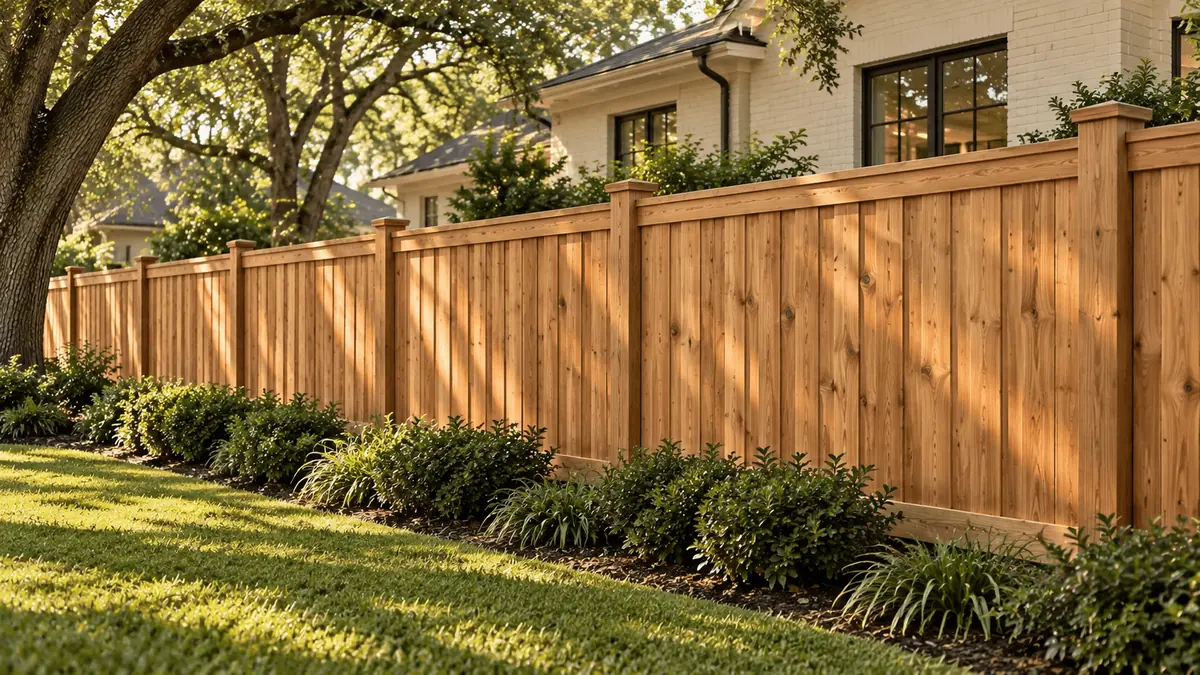
The styles we build most often on Houston lots, in cedar or pressure-treated pine. Every fence gets posts set in concrete, galvanized or stainless fasteners, and adjustable gate hardware, with gates built to match.

Six-foot pickets side by side. The standard on Houston lots.

A second layer of pickets so no gaps show as the wood shrinks.

Suits newer homes. Needs cedar to stay flat.

Front-yard styles, with gates built to match.
Most calls come down to five problems. The posts decide whether a repair will last, so that’s where every estimate starts.
| What you see | We repair when | We replace when |
|---|---|---|
| Leaning posts | Nearby posts are firm. We set a new post in concrete and rehang the rails and pickets. | More than about a third of the posts have failed. |
| Broken boards | Posts are sound. We match the height, profile, and wood of the damaged pickets and rails. | Rot runs through rails and pickets across several sections. |
| Sagging gate | The frame is square. We reset the post, add bracing, and fit adjustable hinges. | The frame has rotted or twisted. We rebuild it to match the fence. |
| Storm damage | Posts beside the fallen run are firm. We secure the yard, rebuild the section, and itemize it for your insurer. | The storm exposed soft posts beyond the section that fell. |
| Ground-line rot | It’s limited to a few boards. We add a replaceable rot board and stain the repair to blend. | Rot has reached several sections along the bottom. |
We also repair chain-link and wrought-iron fences and gates.
A leaning fence is usually a post problem. Failed posts can be replaced as part of a section repair if the rails and pickets are sound. When more than a third have failed, replacement costs less.
Surface weathering on cedar is cosmetic. Soft wood at the ground line, split rails, and termite damage spread, and a patch usually comes back the next year.
A 15-year-old pine fence in Houston is at the end of its life. If you plan to stay, new cedar is the better spend. If you plan to sell soon, a targeted repair and fresh stain can be enough.
LastsLonger. Resists rot and insects and stays straighter in Houston humidity.
FinishHolds stain well and keeps a finished look longer.
CostCosts more up front.
Choose itIf you plan to stay in the home for a while.
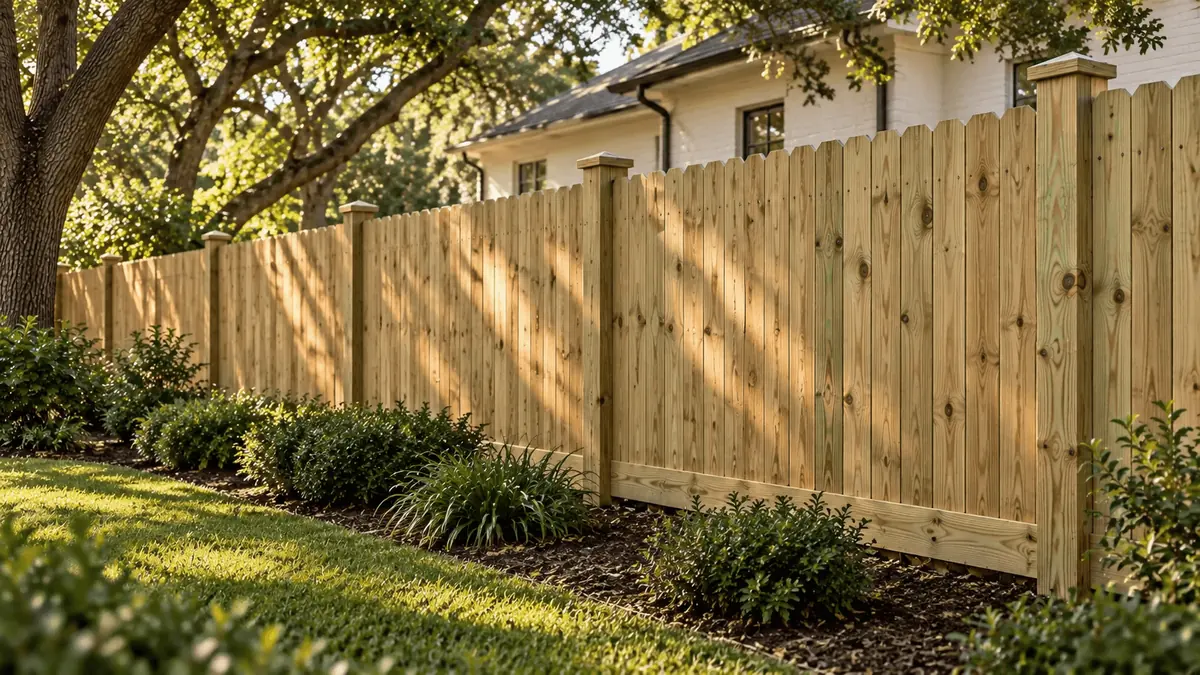
LastsHolds up when it’s sealed and kept off the soil with a rot board.
FinishNeeds sealing to protect the wood.
CostThe lower-cost choice.
Choose itIf budget comes first, or you plan to sell soon.
Four simplified build sequences show the order the parts go on and what carries what, so the posts, rails, and pickets in your written scope make sense when you read it.
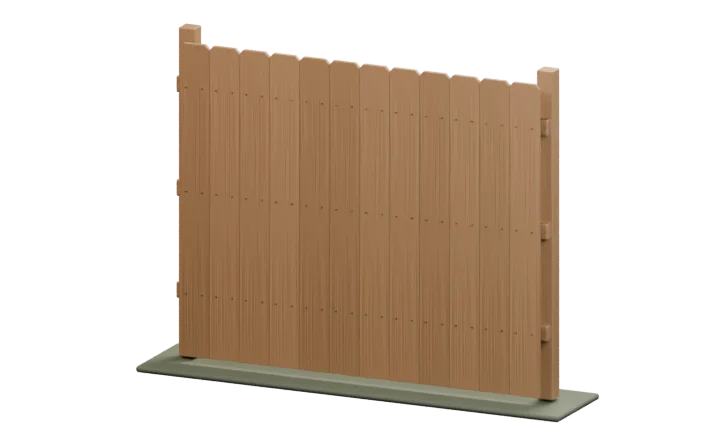
Posts set in concrete, rails between them, a rot board along the ground, then pickets nailed side by side.
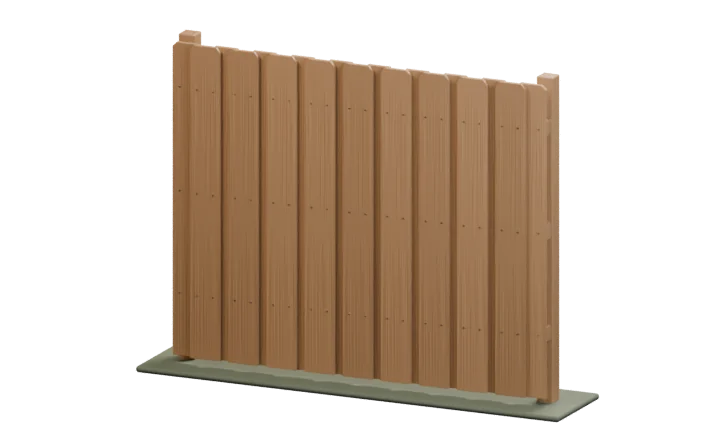
Posts, rails, and the first layer of pickets, then a second layer over the gaps so nothing shows through as the wood dries.
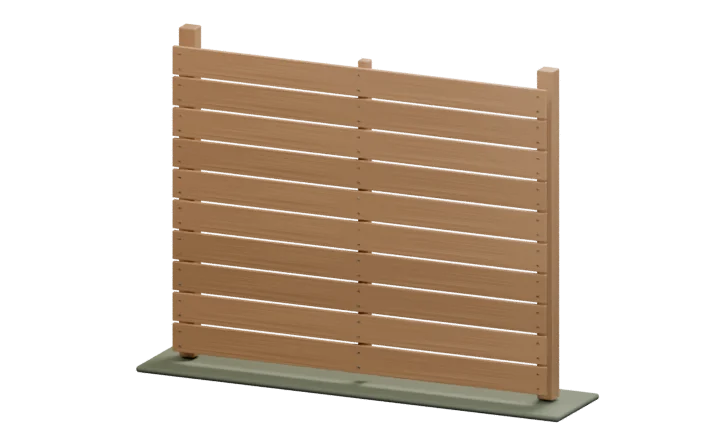
Posts, a middle support between them, then cedar boards run lengthwise and fastened at every post so they stay flat.
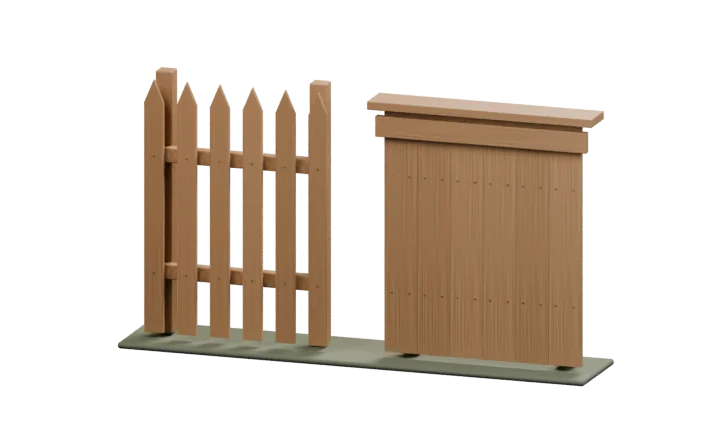
Posts and rails, then either spaced pointed pickets, or solid boards with face trim and a continuous top cap over the ends.
The number of posts drives most repair prices, because each new post means digging out the old footing and pouring a new one. Damaged boards, cedar or pine, gate work, access, and haul-off set the rest. A full replacement is priced by length, height, style, gates, and tear-out. We don’t price posts from a phone photo, because the posts decide the scope.
$2,400–$3,600
6-foot pine privacy, 150 feet
$3,300–$4,800
6-foot cedar privacy, 150 feet
$4,500–$7,500
5-foot wrought iron, 150 feet
A typical north Houston backyard takes about 150 feet of fence. New fences run about $16 to $24 per foot in pressure-treated pine, $22 to $32 per foot in cedar, and $30 to $50 per foot in 4- to 5-foot wrought iron. Tearing out an old fence adds about $3 to $7 per foot. Typical north Houston ranges for 2026. Your written estimate is the price that counts.
A repair quote and a full replacement quote cover different work. We explain what stays, what goes, and what each path costs.
If the work reveals additional damage, we discuss the revised scope and price before proceeding.
Get a written fence estimateWhich posts and concrete footings are repaired or replaced.
The sections, hardware, and gate work included in the price.
Wood choice, fence style, fasteners, and stain if included.
Tear-out, disposal, gate operation, and cleanup.
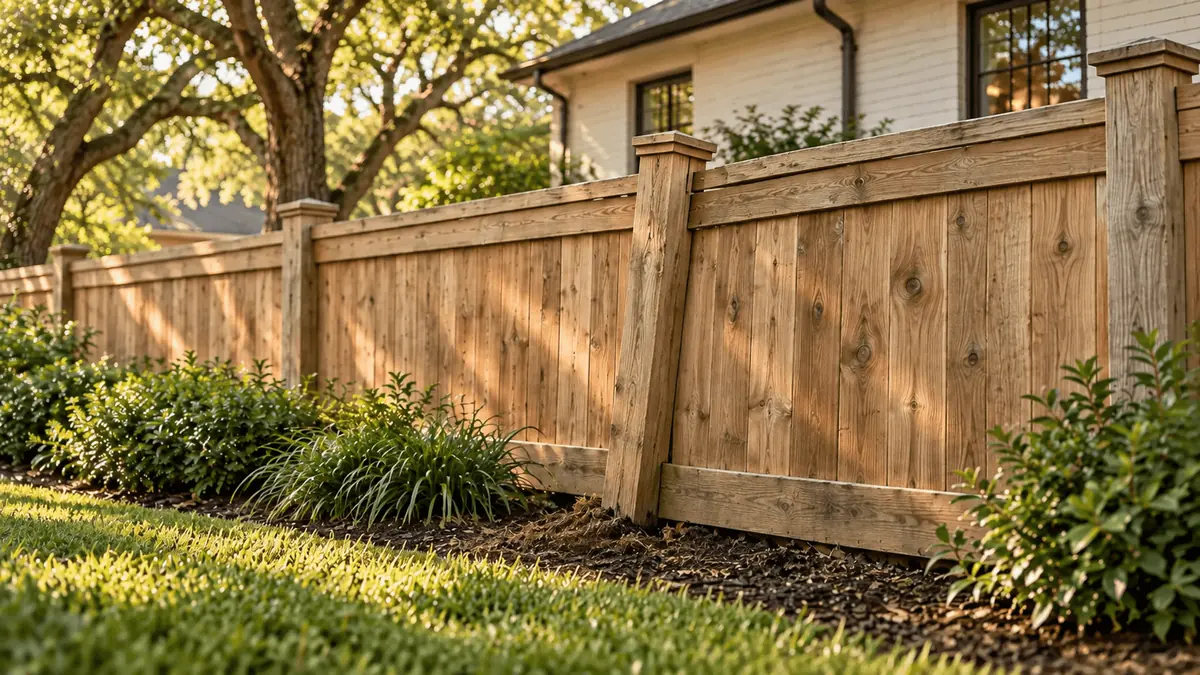
We set line posts at least two feet deep in concrete, and gate and corner posts deeper, because they carry the most load.
A replaceable rot board keeps pickets off the soil, and sealing or staining protects the wood.
We check the posts beside any damaged section, so the repair fixes the cause and not only the boards that fell.
You work with Adam or Kevin from the first walk to the last one, with one point of contact by call or text the whole way through.
We walk the full fence line with you and check the posts, rails, pickets, and gates.
You get the scope, materials, price, and schedule in writing before work starts.
Most repairs take about a day. We close and secure your gates at the end of every workday.
We test each gate with you, walk the finished fence, and haul off the old material.
We serve north Houston and Montgomery County, including Garden Oaks, Oak Forest, Spring, The Woodlands, Tomball, Magnolia, Conroe, and Montgomery. Ask about your address when you call or text.
Not sure if you’re in range? Call or text and we’ll let you know.
Get answers to the last few questions, then request a free on-site estimate.
We check the posts first. Firm posts mean a repair will usually last. If more than about a third have failed, or rot runs along the bottom of several sections, replacement costs less over the next few years. We give you our recommendation in writing.
It depends on how many posts need replacing, how many pickets and rails are damaged, whether the fence is cedar or pine, and whether a gate is involved. Rebuilding an 8-foot section typically runs $350 to $750. A new 150-foot backyard fence typically runs $2,400 to $3,600 in pine, $3,300 to $4,800 in cedar, and $4,500 to $7,500 in wrought iron. You get a free written estimate after an on-site walkthrough.
We don’t take single-post jobs on their own. One leaning post usually means the posts beside it aren’t far behind, so we check the whole run and repair by the section, setting new posts in concrete where they’ve failed. If you’re already planning other fence work, we can replace a failing post as part of that job.
Usually, yes. Most gate problems come from a leaning gate post or worn hinges. We reset or replace the post, add bracing, and install adjustable hinges so the gate stays square. If the frame has rotted, we rebuild it to match your fence.
Yes, and we start by securing the yard. Storms usually knock fences down where posts were already weak, so we check the rest of the line too. For an insurance claim, we photograph the damage and itemize the estimate for your adjuster.
You get the recommended scope, materials, price, cleanup, and expected schedule in writing. If both repair and replacement make sense, we can price both paths.
Yes. We work on existing fences and match the height, style, and board profile as closely as available materials permit.
Cedar, if you plan to stay for a while. It lasts longer in Houston humidity and holds stain better. Pine is the budget choice, and it holds up when it’s sealed and kept off the soil.
Most of our fence work is cedar and pressure-treated pine. We also repair chain-link and wrought-iron fences, including damaged sections and gates.
Yes. We carry general liability coverage and can provide a certificate on request.